
Bhutan
A Secret Land Beckons
Step into Drukyul — the Land of the Thunder Dragon — and join a privileged few in one of the world’s last true sanctuaries.
It’s your chance to explore a mystical land where ancient folklore, including the belief in dragons and demons, blends seamlessly into daily life. At the same time, Bhutan fiercely protects its pristine environment, quietly showing the world how a place can live in harmony with its land, its people, and its culture.
The kingdom that lives by its own rules
When Bhutan installed its first traffic light, it lasted just 24 hours before being removed — it didn’t bring happiness. This small Himalayan nation, nestled between India and China, is the last Vajrayana Buddhist country in the world, and it leads with a philosophy as rare as its landscapes.
Here, progress is measured not in wealth but in Gross National Happiness — every decision shaped by how it affects the people, their culture, spirituality, and the environment. The King mandated democracy into the constitution, healthcare and education are free, tobacco is banned, and at least 60% of the land must remain forested forever. Mountains, rivers, and forests are sacred homes of the gods, and climbing the high peaks is forbidden.
Guided by deep beliefs in rebirth and karma, Bhutanese hospitality and spirituality permeate daily life. Influenced by Tibet yet uniquely its own, Bhutan’s rituals, temples, and spectacular dzongs reveal a culture carefully protected for centuries.
More than just another tour, a journey here with us, lets you peer behind the tourist veil and glimpse wisdom the Bhutanese have long guarded.
Bhutan at a glance
Capital
Thimpu
Main Language
Dzongkha
Currency
Ngultrum
Area
38,394 km sq.
Population
791,524
Main Religions
75% Buddhist
21% Hindu
Climate
Sub tropical to alpine
Around every corner a new insight into happiness
Travel your way
Whichever style you choose, our local guides open doors to Bhutan's culture, supporting you while giving you the freedom to explore at your own pace.
Personalised journeys
With our help, design your dream Bhutan adventure. Your journey, your pace, your passions.
Group journeys
Share a wondrous adventure in the reflective, pristine environment of Bhutan with a small group of like-minded travellers.
A few highlights
Small by Western standards, Bhutan’s two main towns sit beneath brilliant blue skies and forested mountains. Explore lively markets, sample spicy Bhutanese dishes, and wander streets where crimson-robed monks cross paths with young entrepreneurs. Modern life is quietly finding its place here, yet the warmth and rhythm of traditional Bhutanese life remain ever-present.
Thimpu & Paro
Clinging impossibly to a sheer 900-metre cliff, the legendary Taktsang Monastery seems to hover between earth and sky. According to myth, Guru Rinpoche flew here on the back of a tigress to subdue a demon and meditate, sanctifying the land. The hike is steep and rewarding, passing through pine forests draped with prayer flags and opening to magnificent views of the valley below.
Tigers Nest
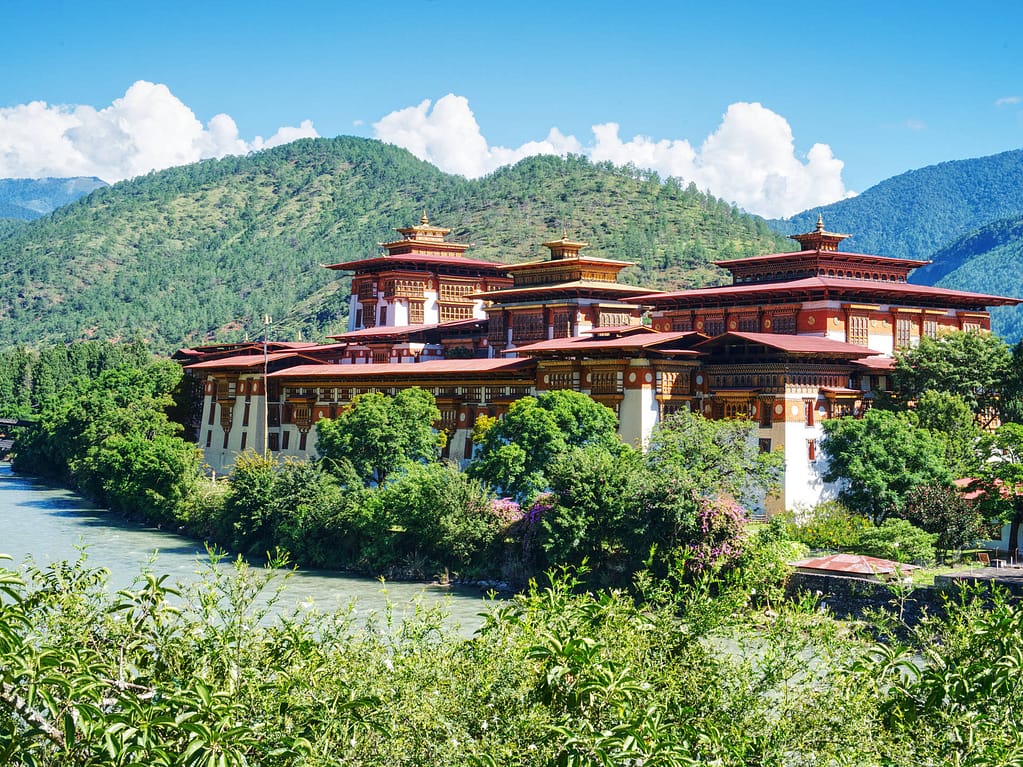
Bhutan’s majestic fortresses and temples rise like sentinels over the valleys, timeless masterpieces of faith and design. Built without a single iron nail, these 17th-century Dzongs and Lhakhangs once defended the land and now serve as centres of worship and community life. Their carved beams, whitewashed walls, and vivid murals glow with spiritual energy — living reminders that in Bhutan, art and devotion are one.
Dzongs & Lhakangs
Linking the modern capital, Thimphu, with the ancient royal capital of Punakha, this 3,140-metre pass offers sweeping views of snow-capped Himalayan peaks. Standing in silent vigil at the summit are 108 white chortens, built in honour of Bhutanese soldiers who fell in battle — a serene memorial surrounded by whispering prayer flags and endless sky.
Dolchula Pass
Bhutan’s spiritual heartland, Bumthang’s four peaceful valleys are home to the kingdom’s oldest monasteries and sacred relics. It was here in 810 AD that Guru Rinpoche healed King Sindhu from a life-stealing spirit, leading to Bhutan’s conversion to Buddhism. Today, its serene landscapes exude centuries of devotion, legend, and quiet energy.
Bumthang
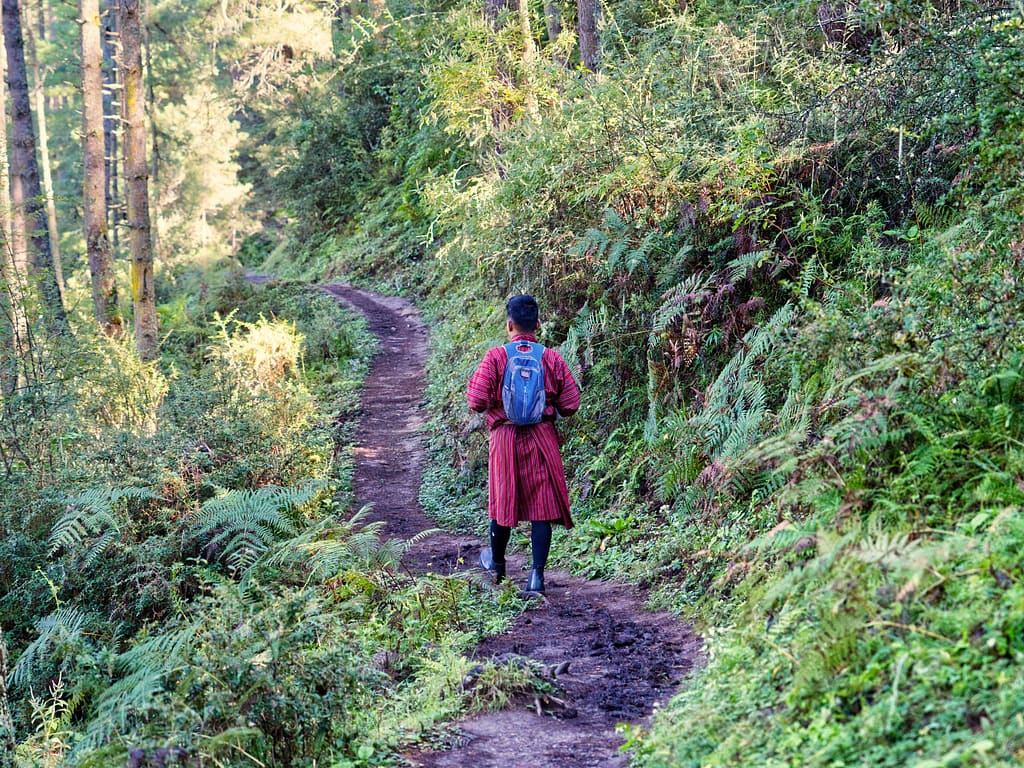
For those drawn to the outdoors, Bhutan offers adventure in its purest form. Trek through pristine forests alive with wildlife, pedal along remote mountain trails that wind through rice terraces and pine forests, or float down crystal rivers framed by untouched wilderness. Along the way, there are countless moments to pause, breathe, and observe the country’s rich wildlife. Connect with Bhutan’s wild, unspoiled heart.
Trekking, cycling & rafting
When to go
Bhutan’s climate shifts dramatically with altitude, and each season brings its own rewards. While weather patterns have become less predictable, the rhythm of travel remains familiar — with peak visitor months still clearly defined. October is the busiest, yet even then, “crowded” Bhutan feels wonderfully uncrowded compared to Nepal or Tibet.
December – February
Cool, crisp, and clear. Apart from high-altitude trekking, everything is open. Paro and Thimphu may see a day or two of snow in late January or early February, but days soon grow sunnier and milder.
March – May
A stunning time to trek and explore. Valleys bloom with wildflowers and rhododendrons from mid-March onward. April is the second-busiest month, with ideal temperatures and vibrant festivals filling the hillsides.
June– September
The monsoon months bring heat, mist, and life. Travel in the mountains can be tricky — rivers swell, roads wash out, and trekking becomes difficult. But the countryside turns emerald green, and it’s a wonderful season for slow-paced cultural travel.
October – November
Bhutan at its best. Clear blue skies, cool nights, and perfect trekking conditions combine with the year’s most spectacular festivals. October is the peak travel month, but the number of visitors is still only a fraction of those in neighbouring Nepal
Unsure when to come?
Get in touch and we’ll help you choose the best time for your adventure.
Quick facts
Geogrpahy
Between the snow-dusted peaks of the great Himalayas and the subtropical plains in the south, ribbons of glacial rivers carve through steep, forested mountains, creating fertile valleys and cascading waterfalls — a landscape as untouched as it is unforgettable, where nature reigns and time moves to its own rhythm.
Ethnicity
The Bhutia arrived from Tibet around the 9th century and form the country’s largest group, shaping much of its northern culture. In the east live the Sharchops, Bhutan’s earliest inhabitants, while the more recent Nepalese communities of the south bring their own vibrant traditions, adding depth to Bhutan’s cultural tapestry.
Culture
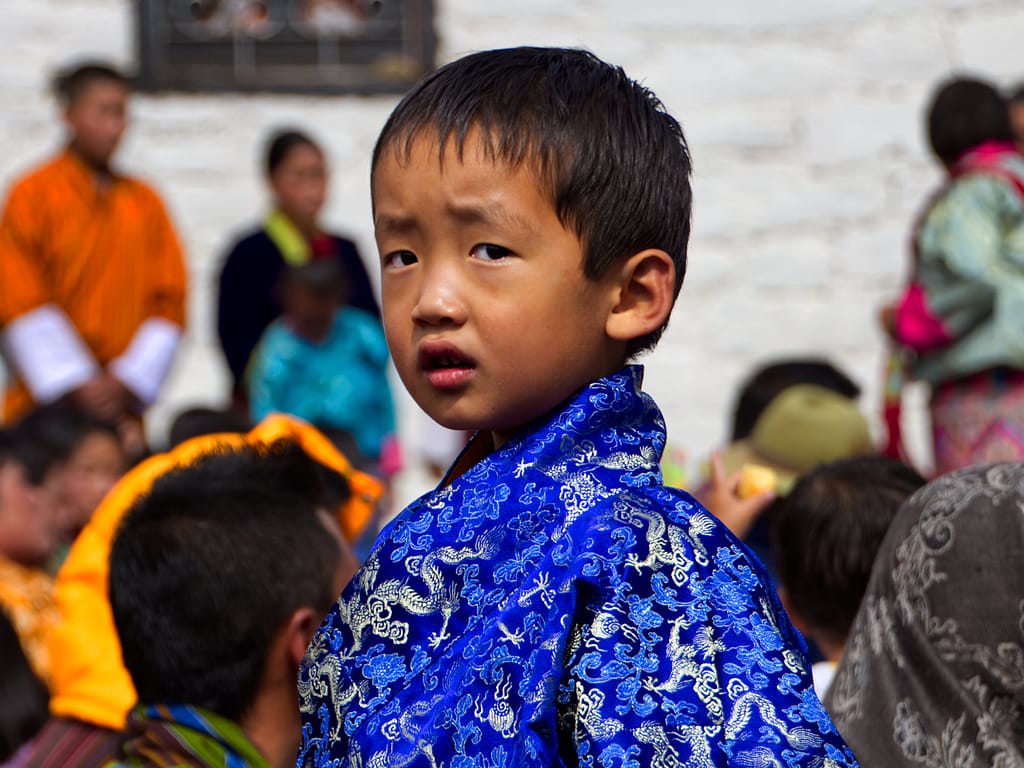
Tradition shapes daily life in Bhutan, where etiquette and respect are woven into every greeting, meal, and meeting. The national dress, graceful architecture, and deep sense of civic duty reflect a quiet pride in identity. Men and women enjoy full equality, and education and healthcare are free for all.
Festivals
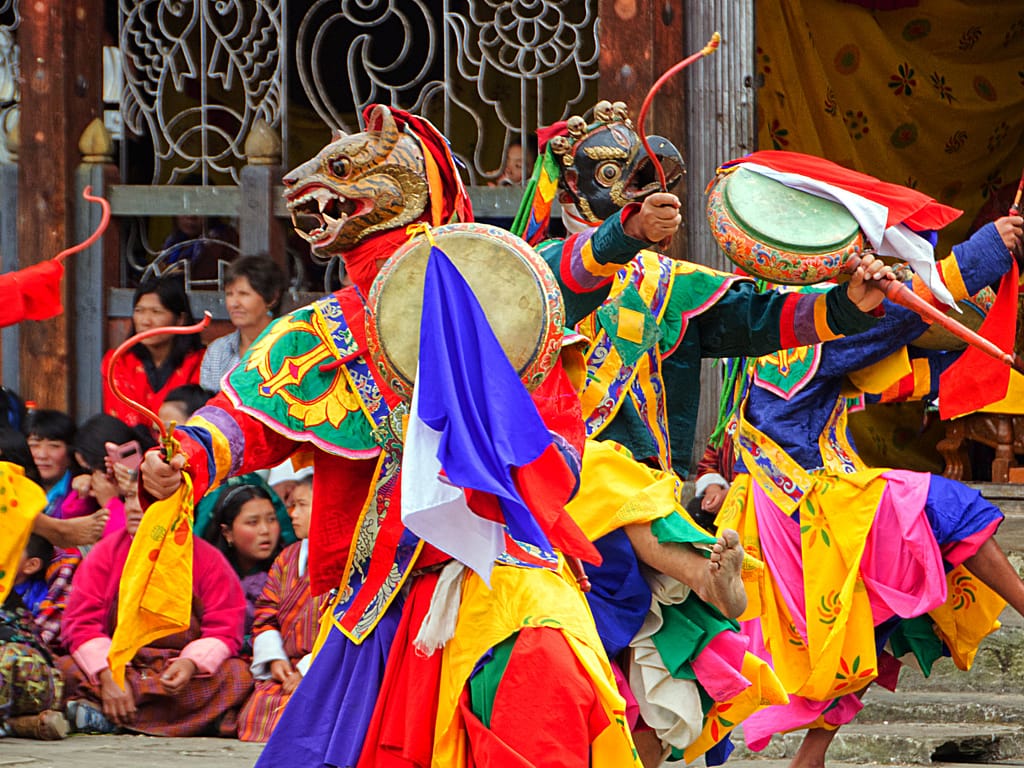
Beating drums, crashing cymbals, and swirling masked dancers fill Bhutan’s air with rhythm and colour. More than celebrations, the vibrant Tshechus are living lessons in faith and folklore — teaching morality and unity through dance and story. Among the laughter and blessings, mischievous clowns remind everyone that joy is also sacred.
Food
Bhutanese cuisine is hearty, distinctive, and often unapologetically spicy. Chilli peppers and cheese feature in almost every meal, creating comforting dishes unlike any you’ve tasted before. While beef, pork, and yak are eaten, the country’s Buddhist roots ensure that vegetarians are well catered for. Nepali, Indian, and Tibetan influences add an extra layer of flavour.
Art & Crafts
Rooted in Buddhism, Bhutan’s artistic traditions are both spiritual and meticulous. The School of Zorig Chusum, founded in 1680, formalised the thirteen traditional arts — from painting and woodcarving to weaving and sculpture — still practised today. With their bold colours, perfect symmetry, and exquisite detail, these works are acts of devotion rather than signatures of fame.