
Tibet
A vast, high-altitude plateau where the sky is always a deep, iridescent blue.
Today Tibet is a modern society, yet its mystical past still pulses through daily life. Ancient monasteries stand as guardians of faith, pilgrims prostrate themselves along sacred kora paths, and the scent of juniper smoke drifts through the mountain air. Here, devotion is woven into every gesture, every chant, every flicker of a butter lamp.
If you take the time to linger, Tiber reveals itself - not as a storybook myth, but as a living culture where past and present, spirit and landscape, meet in powerful harmony.
A mystical land in the clouds
Hidden high above Nepal and Bhutan, behind snow-capped mountains, Tibet — known as Bod to the locals — has always held an air of mystery. Long spoken of, yet rarely visited, it was once a destination only the bravest souls could reach.
Today, you can fly, drive, or train into Tibet — but the sense of enigma remains. Hidden forces stir in the thin air, across the vast landscape, and within the spiritual traditions of daily life. You may not be able to explain them, but you can feel them.
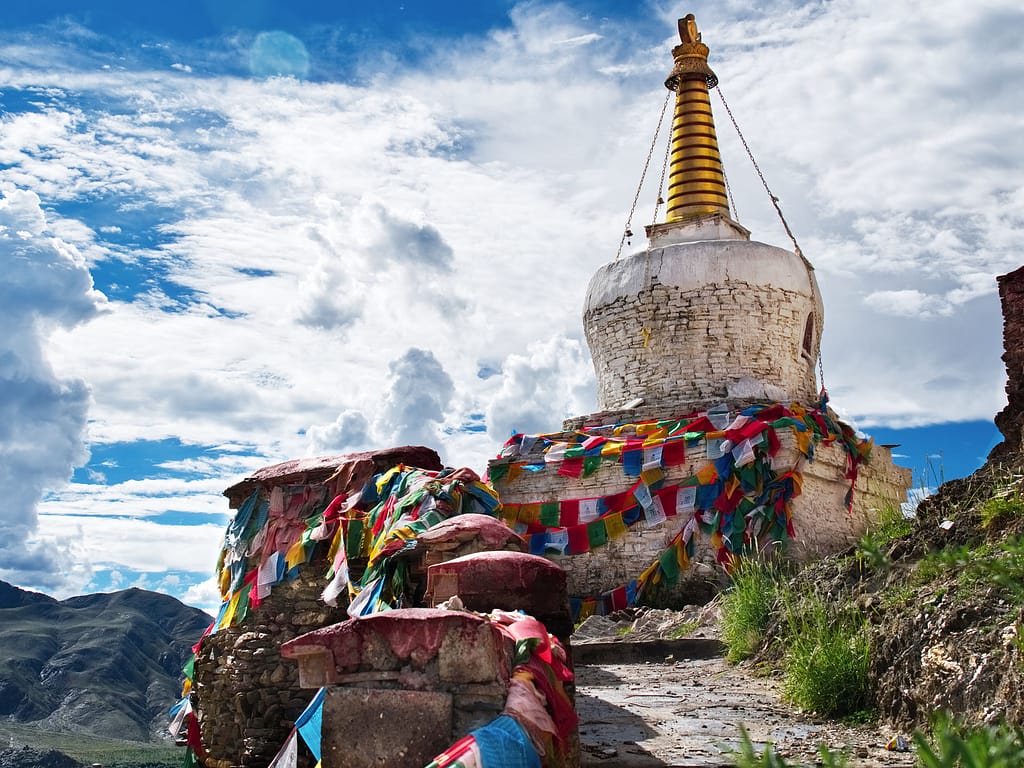
Mighty wind horses carry prayers skyward on colourful flags. Intricately painted thangkas illuminate the mind with symbols and stories. Spinning prayer wheels release mantras into the world, purifying karma. The murmur of chanting blends with the toll of temple bells; incense and juniper smoke drift through courtyards; butter lamps flicker, casting shadows across centuries-old murals.
Nothing here is performed for show — it is all part of a living faith, embraced as naturally as breath. To slow down and sit with these forces is to glimpse something rare: the quiet wisdom of a land perched high on the roof of the world.
Tibet at a glance
Capital
Lhasa
Main Language
Tibetan, Chinese
Currency
Renminbi
Area
2.5 million Km2
Population
3.46 million
Main Religions
Buddhism
Climate
Dry
Around every corner you will find a new adventure
Travel your way
Whichever style you choose, our local guides open doors to Tibet's culture, supporting you while giving you the freedom to explore at your own pace.
Personalised journeys
With our help, design your dream Tibetan adventure. Your journey, your pace, your passions.
Group Journeys
Share an awe-inspiring adventure, searching out the old Tibet with a small group of like-minded travellers.
A few highlights
Known as the “Place of the Gods,” Lhasa rests in a high, mountain-fringed valley along the Kyichu River. While much of the city is now modern, step into the old Tibetan quarter and you’ll find winding alleys, traditional homes, and sacred sites alive with devotion. Allow time to roam and absorb the city’s calm, spiritual pulse.
Lhasa
First built in the 7th century by King Songtsen Gampo and expanded in the 17th by the 5th Dalai Lama, the 1,000-room Potala Palace remains Tibet’s most iconic landmark. Once the religious and political heart of the nation, it shelters gilded stupas of past Dalai Lamas, ancient artworks, and chapels steeped in centuries of prayer.
Potala
Built in the 7th century to enshrine a sacred image of the Buddha, the Jokhang is the spiritual heart of Tibet. Inside, the air is thick with incense and reverence. Outside, spinning prayer wheels and murmured mantras animate the Barkhor, a 1,300-year-old circuit encircling the temple. Join the daily devotion around this sacred path, where faith, art, and everyday life converge.
Jokhang
The constant rattle from spinning prayer wheels competes with the clicking of rosaries counting off mantras, as devotees circumnavigate the Barkhor circuit around the Jokhang temple. These 1,300 year old streets, are where you will find the original look of Lhasa full of Tibetan culture, religion and art.
Barkhor
Regarded as the cradle of Tibetan civilisation, Tsetang lies in the Yarlong Valley beside the mighty Tsangpo River. Rich in myth and history, it is home to Yumbu Lhakhang — a 2,000-year-old royal fortress believed to be Tibet’s oldest building. Perched on a hill above the plains, it symbolises the roots of Tibet’s kings and faith.
Tsedang
Tibet’s second-largest city and home to Tashilhunpo Monastery, founded in 1447, serving as the seat of the Panchen Lama. Its cobbled lanes and chapels remain unchanged for centuries, where pilgrims circle and monks go about their rituals, keeping alive the spiritual rhythm of old Tibet.
Shigatse
Rising above the town of Gyantse, the ancient fortress commands sweeping views of the valley below, its weathered walls recalling a time of kings and battles. Within its old walls stands the extraordinary Kumbum — a towering, many-tiered chorten alive with centuries of prayer. Climb its worn stone steps to explore chapels filled with more than 100,000 murals and statues of Buddhas, Bodhisattvas, and deities.
Gyantse & Khumbum
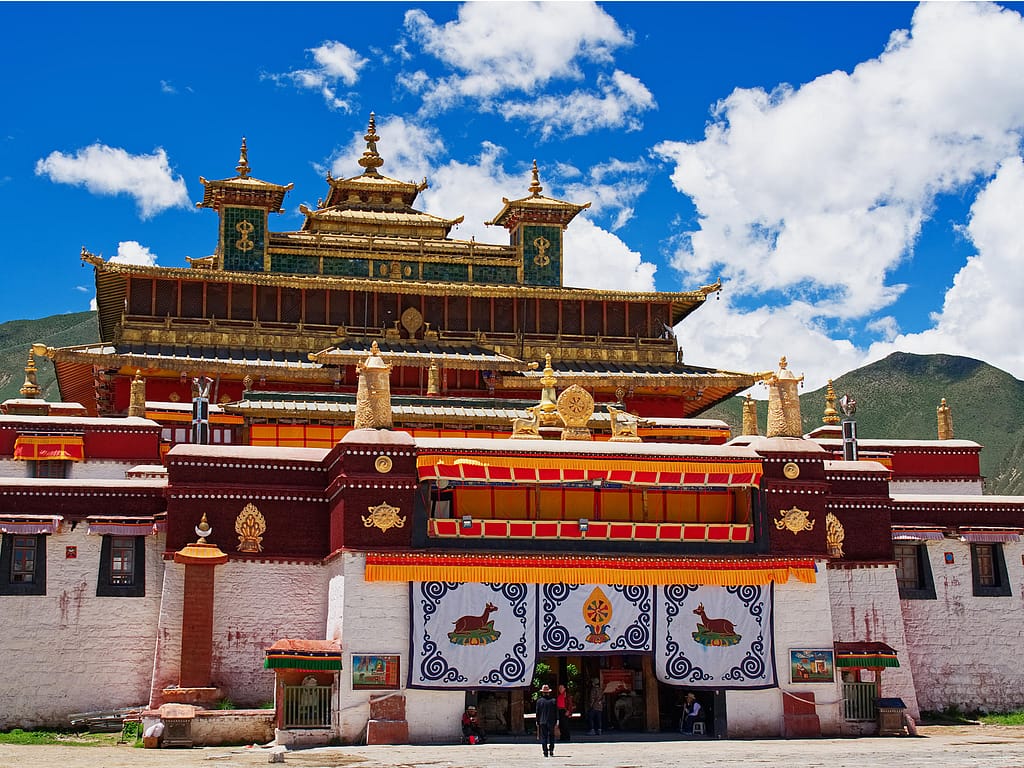
Founded in 775 AD, Samye is considered Tibet’s first Buddhist monastery. Its creation was fiercely opposed by noble families and unseen forces until Padmasambhava subdued the ogress Srin Mo — her knee, still held beneath Samye, protecting both the monastery and all of Tibet. A living testament to the birth of Buddhism on the plateau.
Samye Monastery
Tibet offers some of the world’s most remarkable high-altitude walks — from the 4–5 day trail between Ganden and Samye to the sacred 52km kora around Mount Kailash. For the adventurous, the ascent to Everest Advance Base Camp reaches 6,400 metres — as high as a non-climber can go. Every path reveals the raw beauty and quiet power of the plateau.
Trekking
When to go
Though known as the Land of Snows, Tibet is largely shielded from extreme weather. Its high plateau sees brilliant sunshine most of the year, and while the air is thin and crisp, the climate remains remarkably stable.
December – Late February
Dry, cold, and beautifully clear — but many mountain routes and high roads are closed by snow. Cities such as Lhasa and Shigatse remain accessible and pleasant under bright blue skies, offering an intimate glimpse of daily devotion as pilgrims fill the monasteries.
Late February - Early April
Tibet generally remains closed to foreign visitors.
April – May
Spring brings longer days, melting snow, and warming valleys. Wildflowers return, and the countryside stirs to life. It’s one of the best times for exploring and trekking before the summer crowds, with clear skies offering some of the year’s best views of Everest from April to early June.
June– August
Summer is the high season. Oxygen levels are highest, days are warm, and access to remote regions is easiest. Rain falls mainly at night, leaving mornings fresh and clear — ideal for visiting sacred lakes, mountain passes, and monasteries across the plateau.
September - October
Perhaps the most rewarding months of all. The weather is stable, air is crisp, and harvest festivals fill the valleys. Late September to early December brings spectacular mountain clarity — the best time for Everest views and trekking, with fewer crowds from later in October.
November
Quiet, dry, and cooling quickly. Fields lie fallow, and the plateau glows with soft golden light. It’s a peaceful time for slow travel and monastery visits before the deep winter snows return.
Unsure when to come?
Get in touch and we’ll help you choose the best time for your adventure.
Quick facts
Geogrpahy
Rising at an average altitude of 4,500 metres, Tibet is the world’s highest tableland — a realm of vast horizons and crystalline light. Framed by the Kunlun Mountains to the north and the Himalayas to the south and west, its landscapes shift from forested valleys in the east to open grasslands in the north, and fertile plains in the centre where the great cities stand.
Ethnicity
The plateau is home to a mosaic of ethnic groups. Tibetans form the majority, with Han Chinese, Hui, Monpa, Tamang, Qiang, Sherpa, and Lhoba communities adding to the diversity. Languages, customs, and styles of dress shift noticeably across the plateau, and numerous smaller tribes further enrich the distinct character of each region within a shared cultural heritage.
Culture
Shaped by a remote and often unforgiving landscape, Tibetan culture remains deeply rooted in a devout, philosophical form of Buddhism — strong yet adaptable, warm, quick to laugh, and unfailingly hospitable. Don’t be surprised if you're invited — without fuss or formality — into a home for butter tea and homemade treats. Here, generosity is not a gesture but a way of life.
Festivals
Tibetan festivals are a vivid blend of devotion and joy combining music, masked dances, and ritual. Locals and pilgrims dress in their finest to receive blessings from monks and offer khada (ceremonial scarves), butter for lamps, incense, and grain before celebrations spill into opera performances, horse racing, archery, picnics and laughter.
Food
Shaped by altitude and tradition, Tibetan food is hearty and comforting. Barley replaces rice as the staple, dairy is plentiful, and meat often comes from yak, mutton, or beef. Beloved dishes include momos (stuffed dumplings), thukpa (noodle soup), tsampa (roasted barley flour), and rich, salty butter tea — with vegetarian options now common in towns and monasteries.
Art & Crafts
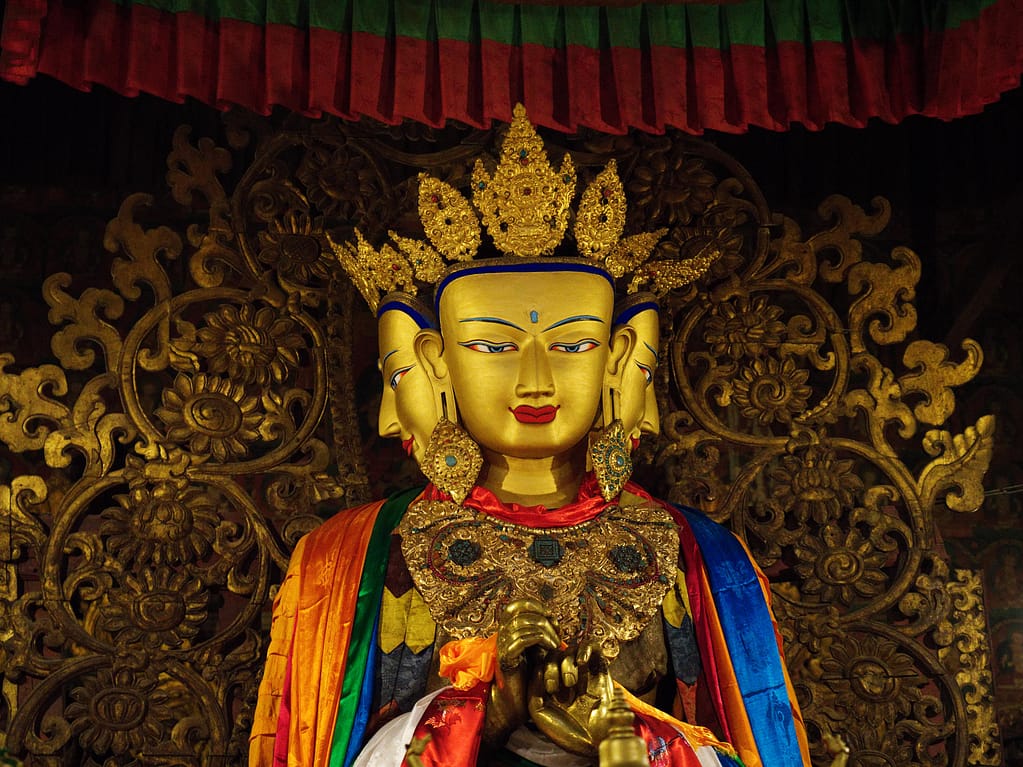
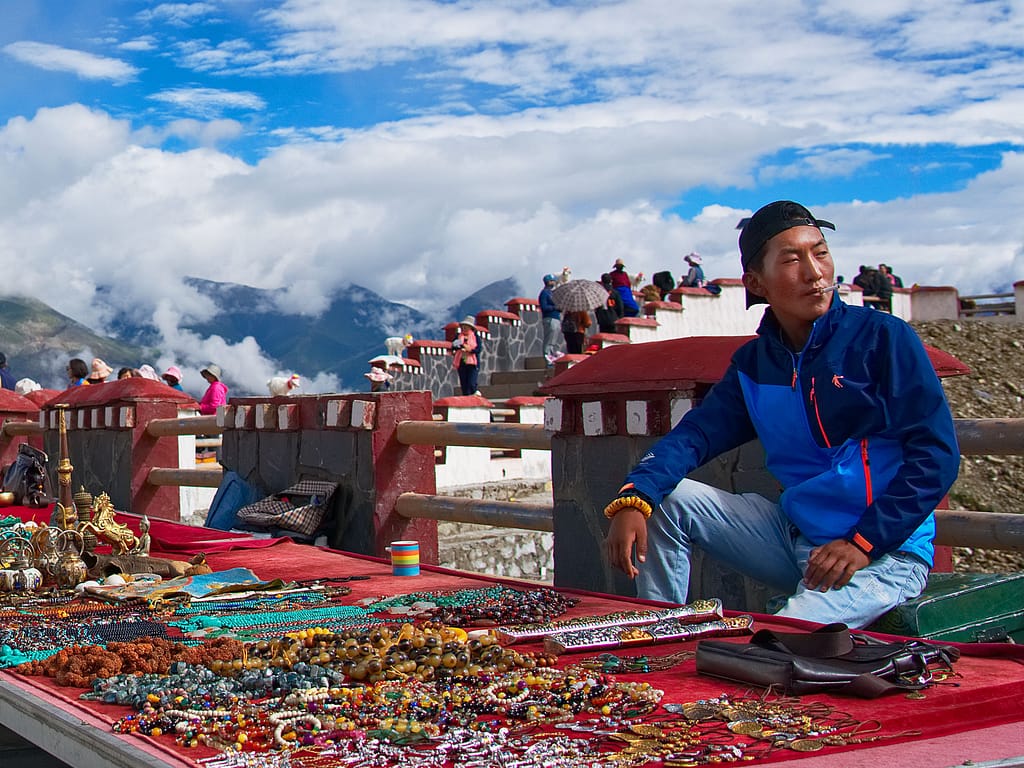
Born in monasteries and shaped by faith, Tibetan art is both spiritual and symbolic. From delicate thangka paintings to intricate metalwork, woodcarving, and textiles, every piece is a prayer in form and colour. Tiny silver amulets, elaborate temple murals, and even cliff paintings all carry the same quiet devotion that has endured for centuries.
When you're ready, let's plan it together